



Environmental Activities
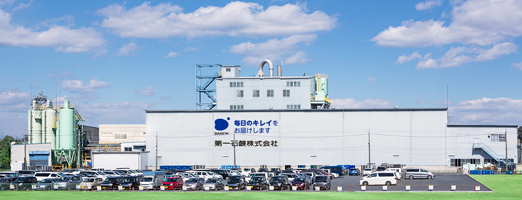
We acquired ISO 14001 Environmental Management System certification as the Toyota Tsusho Corporation Group in 2007.
Environmental Policy
-
1. Basic Concept
We position the reduction of environmental impact and the realization of resource recycling as important management issues, contributing to people's hygienic and comfortable lives through the development, manufacturing, and sales of our products. We place the response to environmental issues, including climate change, at the core of our business activities and promote environmental management with a view to the entire life cycle.
-
2. Scope
This policy applies to our products, services, and business activities (including initiatives related to research and development, procurement, manufacturing, logistics, sales, and use/disposal stages).
-
3. Key Policy
We will set, implement, and regularly review environmental targets based on the following pillars.
-
【Legal Compliance and Governance】
We will identify and ensure compliance with environmental laws, ordinances, industry guidelines, customer requirements, and any other requirements to which we agree. We will regularly evaluate compliance status and take necessary corrective and preventive actions.
-
【Responding to Climate Change (Promoting Carbon Neutrality)】
We will understand greenhouse gas emissions and promote emission reductions by prioritizing them (avoidance, reduction, and substitution) through measures such as improving energy efficiency, electrification and fuel conversion, and utilizing renewable energy. We will assess the risks and opportunities that climate change presents to our business and reflect them in our business plans and environmental targets.
-
【Promoting a Circular Economy (Resource Recycling)】
Based on the 3Rs (Reduce, Reuse, Recycle), we will promote lighter packaging, use of recycled materials, expansion of refills/replacements, and improved circularity from the design stage. We aim to improve yield in production processes, reduce waste generation, ensure thorough separation, and increase recycling rates.
-
【Product & Service Provision from a Lifecycle Perspective】
In consideration of the environmental impact throughout the product lifecycle, from planning and design to procurement, manufacturing, logistics, use, and disposal/recycling, we promote the adoption of raw materials, formulations, packaging, and logistics methods with a smaller environmental footprint. We are committed to resource conservation during the usage phase (e.g., high cleaning performance with small amounts, reduced rinsing cycles) and to safety and environmental considerations (e.g., providing information for proper use, preventing misuse, and appropriate labeling).
-
【Pollution Prevention and Proper Management of Chemicals, Wastewater, etc.】
To prevent pollution of the atmosphere, water quality, and soil, we will implement appropriate chemical management, prevent leaks and spills, and manage and continuously improve wastewater and exhaust emissions. We will also establish procedures and conduct training to prepare for accidents and emergencies.
-
[Consideration for the local environment, such as biodiversity and water resources]
We will identify the impact of water intake and discharge, raw material procurement, and logistics on the local environment and strive to reduce it. Through the promotion of sustainable procurement, we will reduce the burden on ecosystems and resources.
-
【Setting Objectives/Goals and Continuous Improvement】
We will set environmental objectives and targets based on significant environmental aspects, compliance obligations, risks, and opportunities, and implement them systematically. Through internal audits and management reviews, we will continuously improve the environmental management system and environmental performance.
-
【Education, Capabilities, Communication, and Information Disclosure】
We make this "Environmental Policy" known to all employees and raise environmental awareness through environmental education and training according to their roles to improve competence. We strive to maintain communication with stakeholders in our business and promote the strengthening of such communication, disclosing environmental information as necessary.
-
June 1, 2026
Daiichi SEKKEN Co., Ltd.
President and Representative Director

Activities
(1) Promote Pollution Prevention Activities
(1) We work to control air and water quality, prevent noise, vibration, odors, and soil contamination, and reduce industrial waste.
(2)We participate in Gunma Prefecture’s Environmental Month Pollution Prevention Inspection Campaign every June.
(2) Promote CO2 Reduction
At Kyushu Office
① We changed fuel oil A for the boiler to LPG.
②We conserve energy by using LED lighting equipped with human‑motion sensors.
(3) Enhance Internal and External Audits
We undergo Corporate System Audit, External Audit, Internal Audit by Toyota Tsusho Corporation's Safety and Environmental Promotion Division on a regular basis.
(4) Education and Training Activities
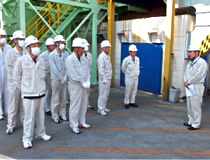
(1) We conduct environmental incident response training twice a year with employees and relevant departments.
(2) We conduct environmental education for employees twice a year as part of our improvement activities.
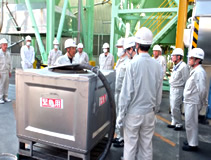
(5) Reduce Waste and Promote the 3Rs
(1) We separate waste into 15 categories and ensure thorough collection and sorting of recyclable materials and general waste.
(2) We are thoroughly reducing the amount of waste sent to landfill, and are promoting the goal of zero final landfill disposal.
(6) Adoption of Recycled Plastic Bottles
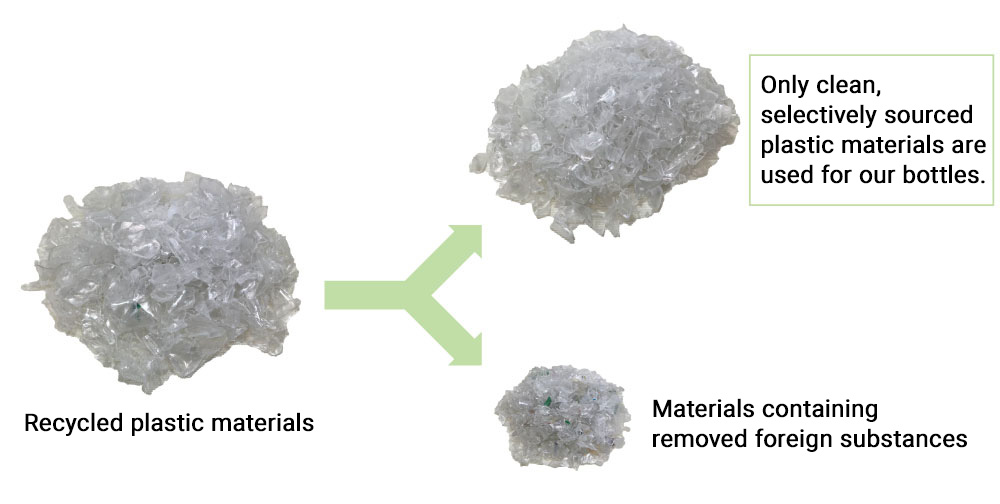
We use recycled plastic as the raw material for our own molded bottles from 2003, and we are working to create environmentally friendly products.
We also strive to improve quality by removing fine foreign matter contained in the recycled plastic.
(7) Promote Development of Nature-friendly Products
We strive to develop products that emphasize the use of naturally derived raw materials and reduce the amount of detergent and water required for rinsing.
(8) Promote Compliance
We have established an internal code of conduct and ethics and conduct regular internal training to ensure compliance.